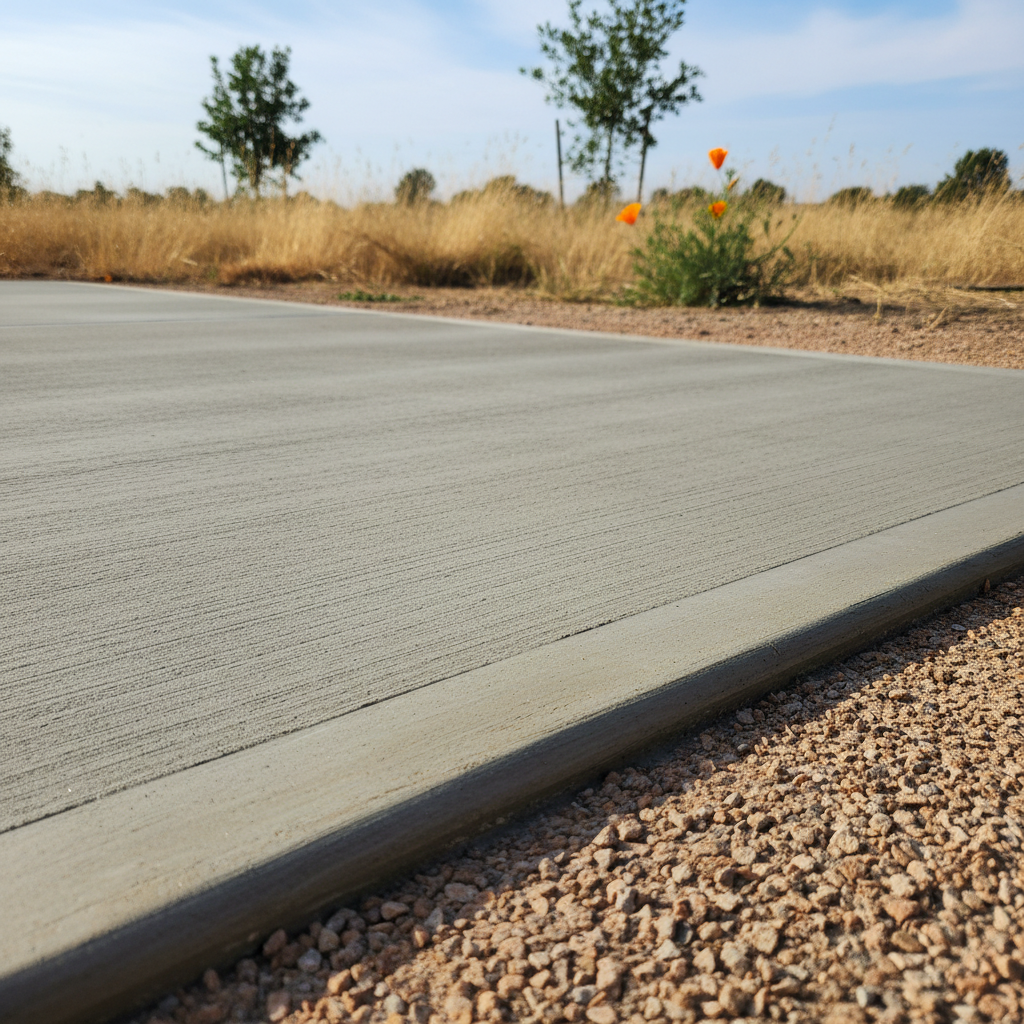
Ever stare at a cracked old driveway or a patch of dirt in the backyard and think about pouring some concrete over that? It is a common thought for homeowners around here. Whether you are out near Valley Home or closer to downtown Oakdale, handling concrete seems straightforward on paper. But Mighty Concrete has seen plenty of do-it-yourself weekend projects turn into lumpy, cracked headaches because people skipped the important prep steps.
Before you even think about ordering a truck or mixing bags, you need to look at what is under your feet. Around Stanislaus County, our soil can shift and settle, especially when we change from dry summer heatwaves to damp winter weeks. If you do not dig down, clear out the organic topsoil, and lay a proper compacted gravel base, your brand-new slab will crack the first time a heavy load rolls over it.
What You Can Realistically DIY
Pouring a massive driveway by yourself is a recipe for disaster. Concrete sets fast, especially when the Central Valley sun is beating down on you at ninety degrees. However, there are smaller projects you can tackle on your own over a weekend.
- Setting up small garden borders or low-traffic stepping stone paths.
- Pouring a simple backyard fire pit pad or a small AC unit slab.
- Demolishing and hauling away a tiny, cracked section of an old walkway.
If you stick to projects that take less than a yard of concrete and do not require heavy structural weight, you can save some cash by doing the work yourself. Just make sure you rent a plate compactor for the sub-base. Skipping that step is the number one reason DIY pads sink.
When You Need to Call a Pro
The moment your project involves vehicles, house foundations, or complex drainage, you need to step back and hire someone who does this every single day. Mighty Concrete gets called in all the time to rip out amateur pours that cracked within six months because the grade was wrong or the rebar was missing.
Driveways, RV pads, and large patios require precise grading so water flows away from your home foundation instead of pooling against it. If you get the slope wrong on a patio in your Oakdale backyard, you will end up with a puddle right outside your sliding glass door every time it rains. Pros also know how to time the finish work. Working a surface at the exact right moment during the curing process is a skill that takes years to master.
The Day of the Pour
If you hired a contractor like Mighty Concrete, your job shifts to staying out of the way while the crew works together. Forms go up, rebar gets tied, and the truck rolls in. Everything happens fast once the mix starts flowing.
If you are doing a small DIY pour, have all your tools staged beforehand. Screed boards, bull floats, and edging tools need to be right there within arm reach. Do not run to the hardware store for a missing trowel halfway through because by the time you get back, the mix will already be setting up on you.
After the Pour
The hardest part is over, but your job is not finished yet. Concrete does not actually dry to get hard; it cures through a chemical reaction that needs moisture. If you let it bake in the dry Oakdale wind without any attention, it will lose strength and crack prematurely.
Spray the slab down with a gentle mist of water starting the day after the pour, or use a curing compound to lock the moisture in. Keep foot traffic off it for at least twenty-four to forty-eight hours, and keep heavy vehicles off a new driveway for a full week. Treat it right from day one, and that slab will serve you well for 15 to 20 years or more.